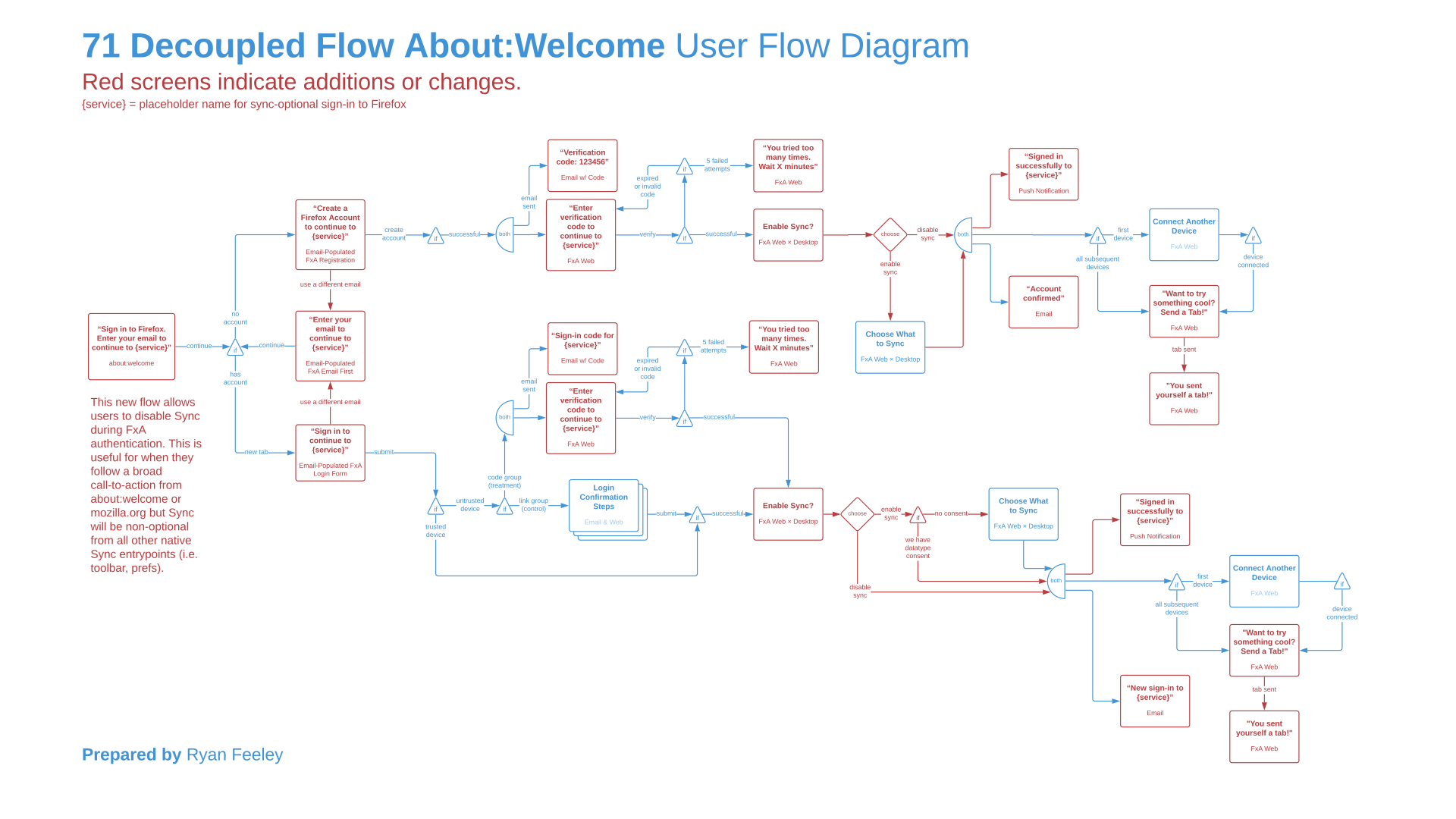
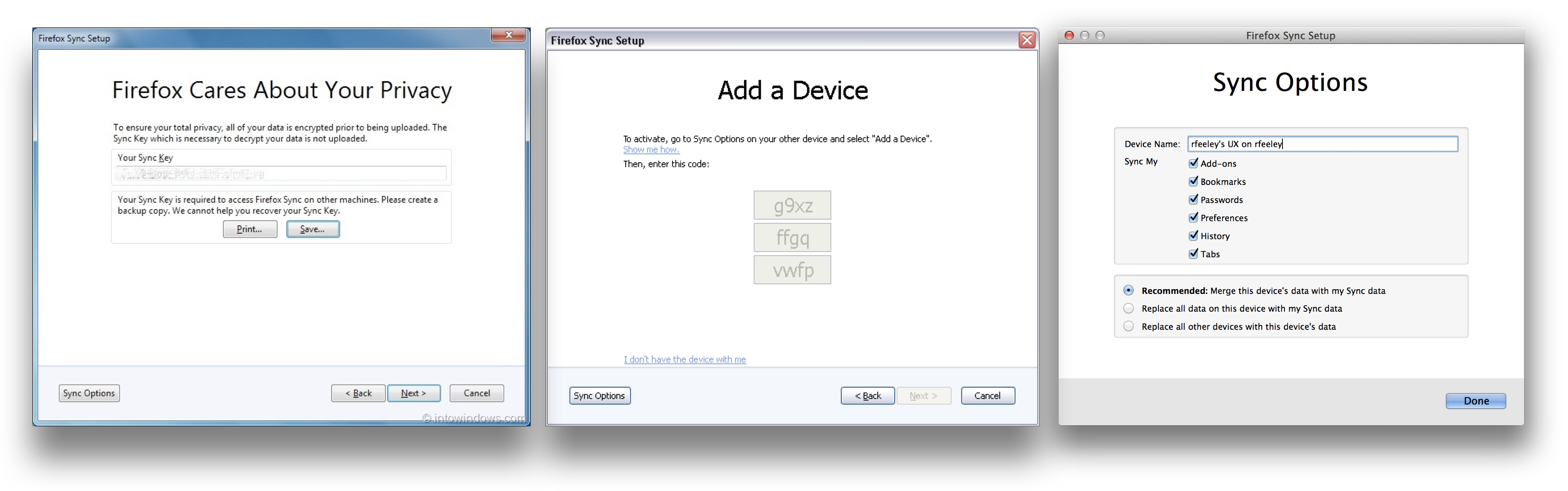
Firefox was the first browser to introduce syncing of bookmarks, history, and more but had the problem in that few people could figure out how to configure it correctly.
Firefox Sync Reboot
Creating an account system for the basis for future Firefox connected services, and revolutionizing Sync in the browser.
The original Sync authentication method, JPAKE, was not gaining traction with users, and most had never synced a second device. Beyond replacing this with a more conventional account system, we transformed Firefox into a browsing system where a user can better control their data on multiple devices.
The problem and how it was solved
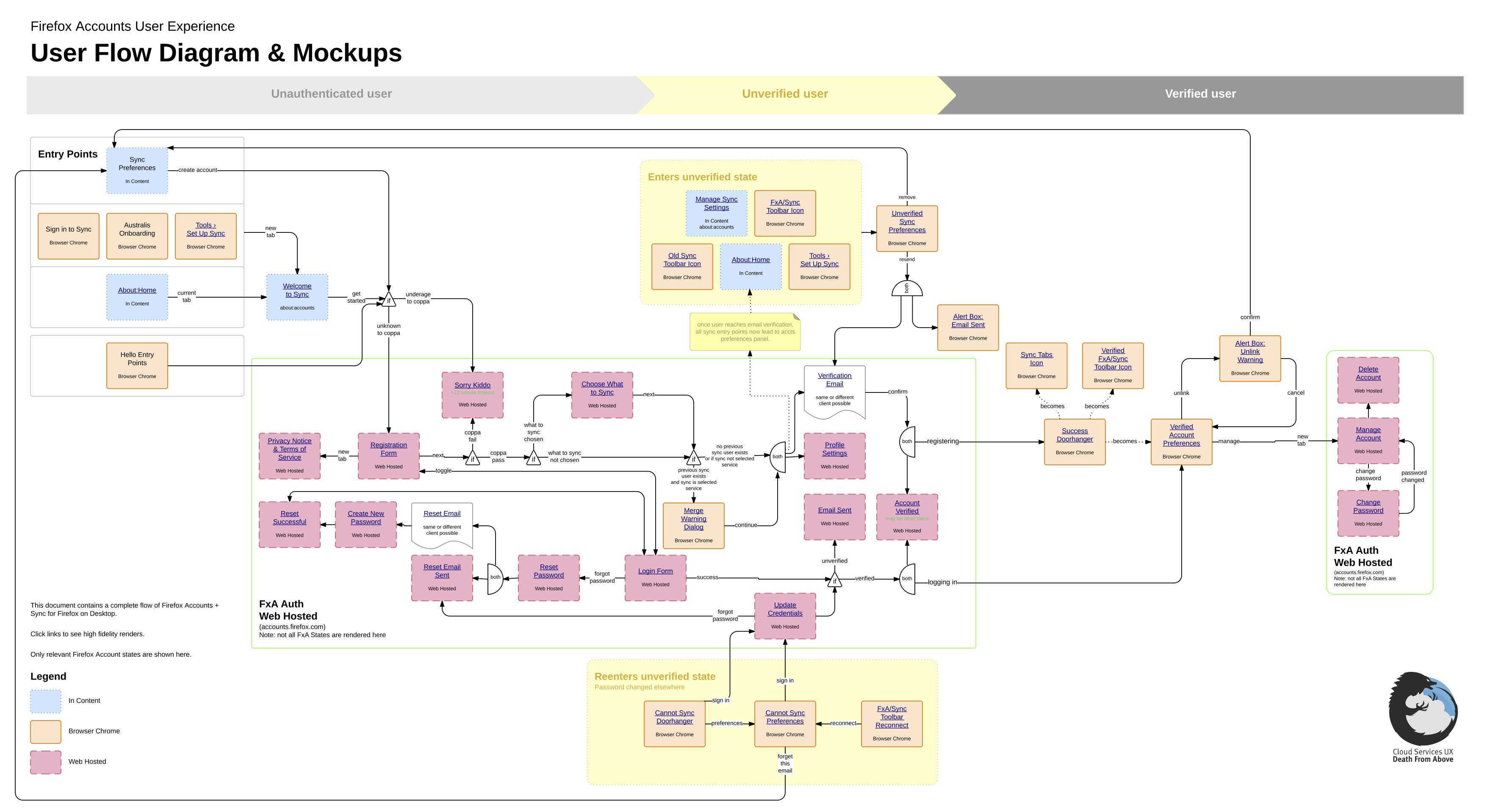
Along with my design engineer, I was tasked with designing a conventional account system that integrated into Firefox on every platform.
The process involved working with product managers and engineers to create a detailed, and color-blind friendly, user flow diagram, desaturated below, that detailed all of the surfaces and their possible states.
Each state linked to a detailed wireframe describing more detail.
What came next?
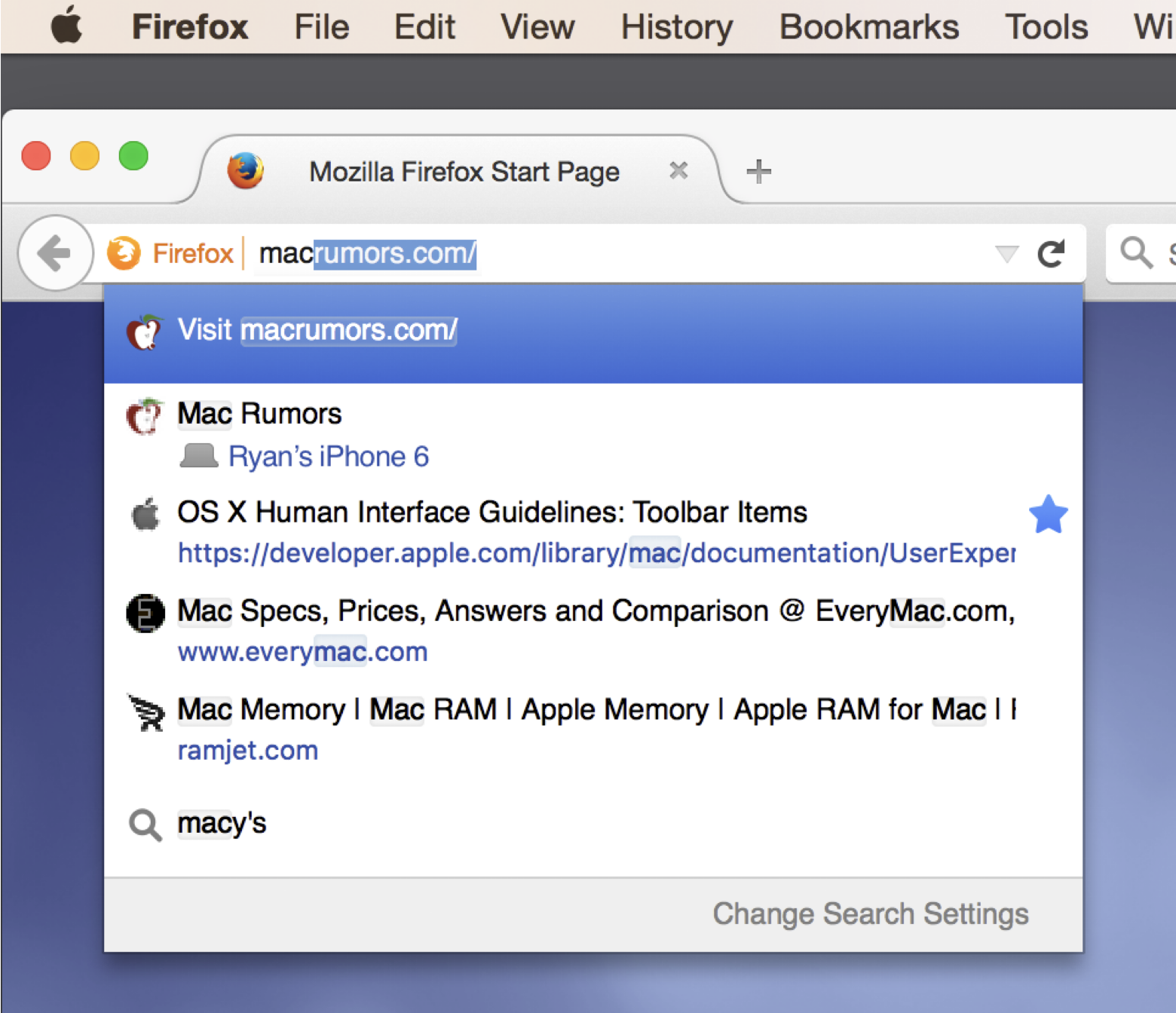
With a successful launch under our belt, we invested further into the feature by bringing some of the Sync features, previously background features, into the foreground of the browsers.
We first breathed new life into the Tabs from Other Devices feature, shortened to Synced Tabs, and then created the Send Tab feature.
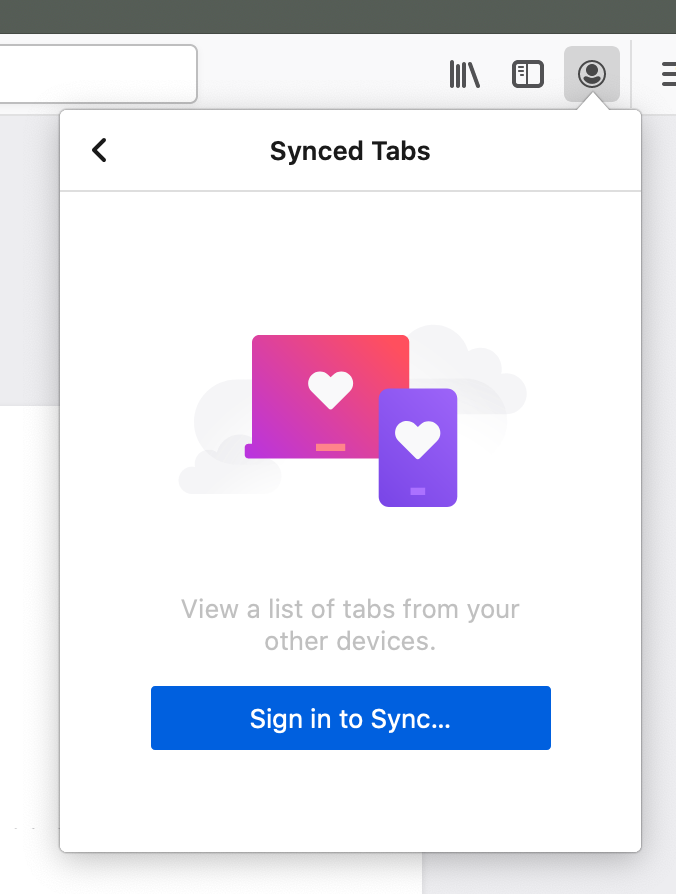
All of these initiatives were coupled with remote user testing to ensure users could make their way through the journey to set up Sync.
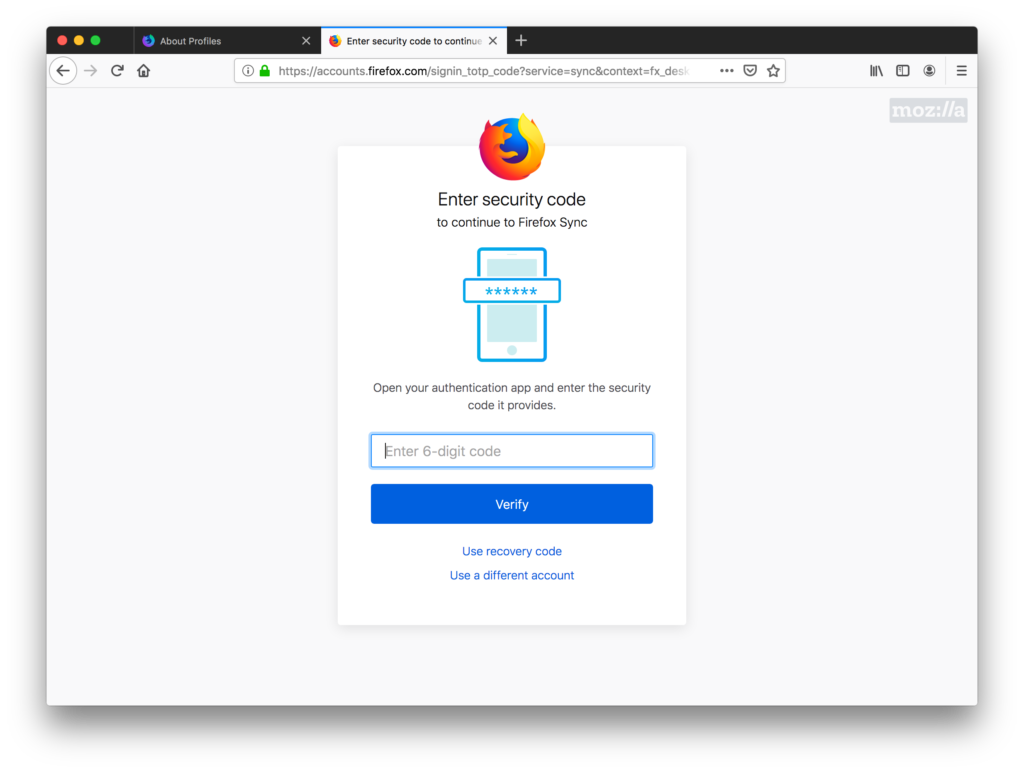
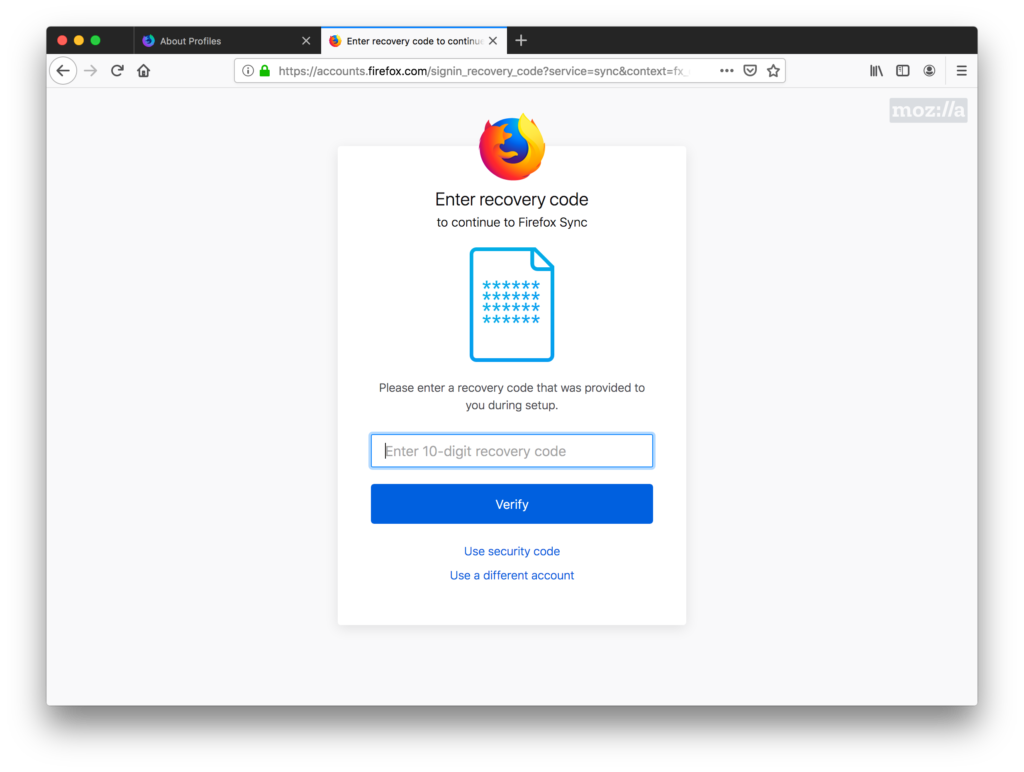
Over the course of many years, user behaviour was tracked and optimized through the experience. Further work was done to strengthen the security of the system with 2FA and Recovery Codes.
Impact

Within 10% of the time, the new Sync had attracted 10x the number of users eventually reaching 20M MAU.